

July 21, 2026
Guide to Surface Preparation Before Blasting
Even with the right abrasive and the right machine, results will fall short of the target quality if the part isn't properly prepared for blasting. Here are the steps to take before blasting begins.
1. Removing Oil, Grease, and Dirt: If oil, grease, or organic dirt is present on the surface, the abrasive will smear this layer into the surface rather than cleaning it — degrading surface quality and shortening abrasive life. Removing the oil/grease layer with an appropriate solvent or alkaline wash before blasting directly improves blasting efficiency and result consistency.
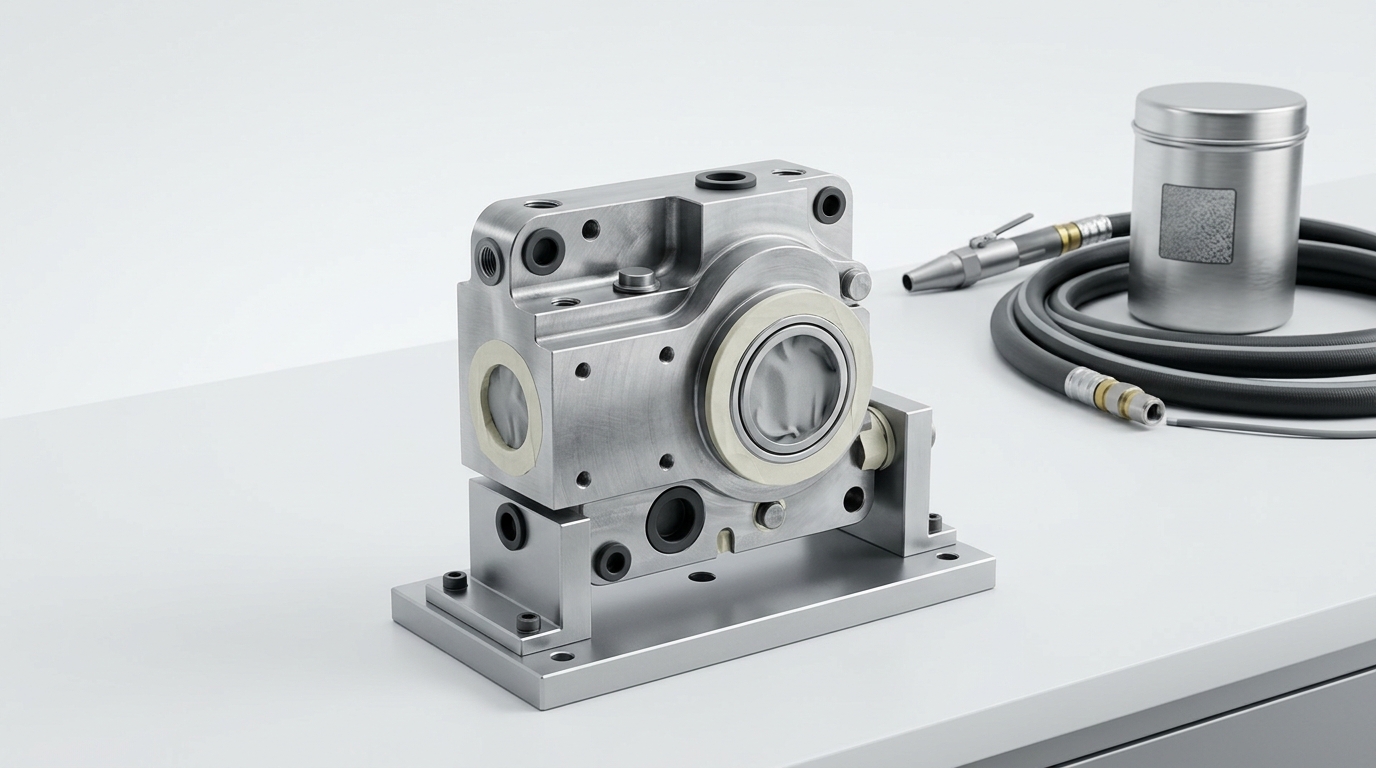
2. Masking: Areas that must not be blasted — threaded holes, precision-toleranced surfaces, sealing faces, or electronic/sensitive components — should be protected beforehand with appropriate tape, plugs, or dedicated masking materials. Skipping masking can cause irreversible wear or dimensional loss on critical-tolerance surfaces.
3. Moisture Control: High ambient humidity, especially in dry blasting systems, can cause the abrasive to clump and clog nozzles/hoses. Storing consumables dry and under proper conditions is essential for an uninterrupted, consistent process.
4. Part Fixturing and Positioning: Firmly fixturing the part inside the blasting cabinet, or correctly positioning it with a turntable/holder, keeps nozzle distance and angle consistent across the entire surface. Inadequate fixturing results in uneven processing — under-blasted in some areas, over-blasted in others.
5. Pre-Blast Surface Inspection: It's advisable to inspect the part for cracks, casting defects, or previously unnoticed damage before blasting; blasting does not hide existing defects — in some cases it makes them more visible, which actually simplifies post-process quality control.
6. Correct Equipment and Parameter Pre-Setting: Determining abrasive type, air pressure, and nozzle distance/angle in advance — based on the material being processed and the target surface result — prevents material loss from trial-and-error and inconsistent outcomes. (See our guides "How to Choose the Right Abrasive" and "Wet Blasting or Dry Blasting?".)
Skipping these preparation steps will compromise the outcome no matter how correctly the blasting itself is performed. Contact us for a preparation plan tailored to your part type and target surface quality.
Let's Find the Right Solution for Your Needs Together
Get in touch with us to learn more about pre-blasting surface preparation and process planning.