
August 4, 2026
How to Choose the Right Abrasive (Consumable)?
The success of a blasting operation largely depends on choosing the right abrasive. The wrong choice can result in surface damage, excessive consumable usage, or insufficient cleaning. Here are the key criteria to consider.
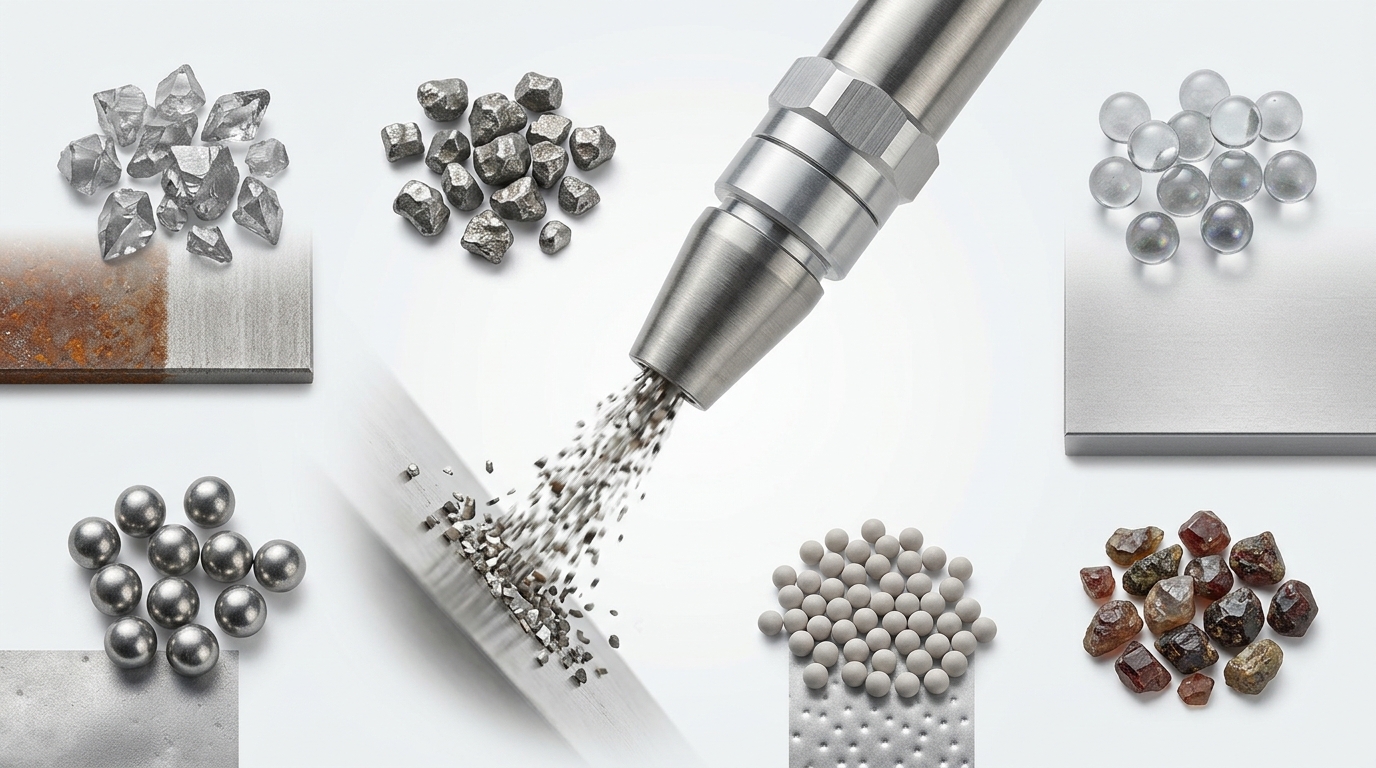
1. Material Type and Hardness: The material of the part being processed (steel, aluminum, glass, composite, etc.) determines the required abrasive hardness. Hard, durable surfaces (castings, steel) call for hard abrasives such as aluminum oxide or steel shot/grit, while delicate or soft surfaces (aluminum, glass, thin sheet metal) require softer, less aggressive abrasives such as glass bead or plastic media. The abrasive must be harder than the material being processed — otherwise effective cleaning/roughening cannot be achieved.
2. Grain Shape (Angular / Spherical): Angular grains (aluminum oxide, garnet, steel grit) cut into the surface, providing faster, more aggressive removal — preferred for stripping rust, scale, or old coatings. Spherical grains (glass bead, steel shot, ceramic bead) work the surface by peening rather than cutting, without creating sharp notches — preferred for polishing, matte finishing, and shot peening applications that improve fatigue resistance.
3. Grain Size: Coarser grains (lower mesh/FEPA F number) remove material faster but leave a rougher surface; finer grains (higher mesh/FEPA F number) work more slowly but produce a smoother/brighter finish. The target surface roughness (Ra) and the next process step (paint, coating, measurement) are the main factors determining grain size.
4. Reusability and Cost: Durable abrasives such as steel shot/grit can be reused hundreds of times, lowering unit cost in high-volume, continuous production. Materials such as garnet or glass bead have a shorter reuse life but are preferred for single-use or low-volume jobs, and in applications where contamination risk must be kept low (medical, aerospace).
5. Health and Environmental Criteria: Abrasives containing free crystalline silica (certain sand types) carry a silicosis risk; today, alternatives with no or very low free silica content — such as aluminum oxide, garnet, glass bead, or ceramic bead — are preferred. Enclosed-system operation and the use of personal protective equipment (PPE) are also part of this criterion.
6. Application Method: Some applications, such as water-jet cutting, require low chlorine content and a specific hardness range (e.g., garnet), while shot peening requires much tighter control of grain size and hardness tolerances (compliance with standards such as Almen intensity).
Quick Selection Guide:
| Need | Recommended Abrasive Type |
|---|---|
| Fast rust/scale/old paint removal | Aluminum oxide (angular), steel grit |
| Polishing / matte finishing (delicate surfaces) | Glass bead, ceramic bead |
| Fatigue life improvement (shot peening) | Steel shot, ceramic bead (spherical, narrow grain range) |
| Water-jet cutting | Garnet |
| Reusable, high-volume operations | Steel shot/grit, aluminum oxide |
| Environments with high silicosis/health sensitivity | Aluminum oxide, garnet, glass bead, ceramic bead (free-silica-free types) |
We can help you evaluate the right abrasive choice together, based on your part's material, target surface finish, and production volume.
Let's Find the Right Solution for Your Needs Together
Get in touch with us to learn more about abrasive (consumable) selection.